

Why Healing Hearts Memory Books Make the Perfect Stocking Stuffer
The best stocking stuffers are not always the flashiest. Sometimes the smallest gift is the one someone keeps for years, especially when it gives them a place to remember, reflect, and feel close to someone they love.
Healing Hearts Memory Books make good stocking stuffers because they are thoughtful without being overwhelming. They are personal without requiring the giver to say all the perfect words. They offer comfort in a season that can feel joyful, tender, complicated, or all of those things at once.
A memory book can sit quietly among candy, ornaments, cozy socks, and little surprises. Then, long after the holiday morning has passed, it can become something much more lasting: a safe place for stories, photos, favorite sayings, and the small details people never want to forget.

Why Healing Hearts Memory Books Make the Perfect Stocking Stuffer| A small gift can carry real emotional weight
Stocking stuffers are often treated as bonus gifts. They are the small things that fill in the gaps, sweet treats, lip balm, gift cards, puzzles, or tiny toys. Those are fun, and they have their place. Still, a stocking can also hold something meaningful.
That is where a memory book stands out.
A Healing Hearts Memory Book is not just another item to unwrap. It gives someone a gentle invitation to write down the moments that matter. It can hold memories of a loved one who has passed, stories from childhood, family traditions, favorite recipes, holidays spent together, or little details that might fade if no one writes them down.
That kind of gift feels different because it says:
Your memories matter.
Your grief deserves space.
Your stories are worth keeping.
The people you love are still part of your life.
During the holidays, those messages can mean a lot. Many people feel the absence of loved ones more sharply when familiar traditions return. A song, ornament, recipe, or empty chair can bring back a rush of feeling. A memory book does not erase that ache, but it gives it somewhere to go.
It can turn quiet longing into a written story. It can turn a passing memory into something the whole family can share.
It is thoughtful without being too heavy
One reason people hesitate to give heartfelt gifts is fear. They worry the gift will feel too emotional, too intense, or too difficult to open in front of others.
That is understandable. Grief and memory are deeply personal. Even a loving gesture can feel awkward if it puts someone on the spot.
A memory book works well as a stocking stuffer because it can be received gently. It does not require a big speech. It does not need a dramatic moment. Tucked into a stocking, it feels intimate and low-pressure.
The recipient can look through it right away, or save it for a quieter time. They can fill in one page, write for an hour, or let it sit until they feel ready. That flexibility matters.
Some gifts demand an immediate reaction. A memory book gives someone permission to move at their own pace.
If the holiday gathering is busy, the book can be set aside until later. If the recipient feels moved, they can open it and share a memory. Both responses are valid. The gift simply opens a door.
It lasts longer than most holiday extras
A lot of stocking stuffers are meant to be used up. Candy gets eaten. Candles burn down. Small gadgets get misplaced. A memory book is different. It becomes more valuable the more it is used.
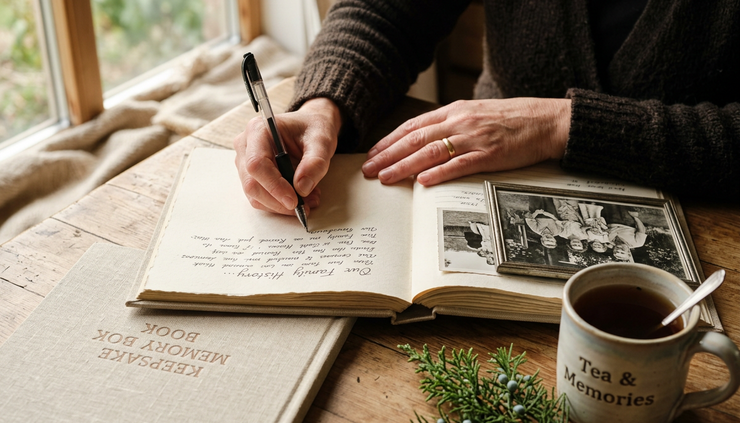
At first, it is a blank or guided book. Over time, it can become a family keepsake.
It might include:
A favorite holiday memory
A story about how someone laughed
A handwritten note about a family tradition
A photo from a special day
A recipe connected to someone’s memory
A list of sayings, songs, or places that bring comfort
A letter the writer never had the chance to say out loud
Those details may seem small at first. Years later, they can become priceless.
The sound of someone’s laugh, the way they decorated the tree, the meal they always requested, the phrase they repeated all the time, these are the details families worry they will forget. A memory book helps preserve them in one place.
That makes it more than a seasonal gift. It becomes part of a family’s emotional history.
It fits many kinds of relationships
A thoughtful stocking stuffer does not need to be expensive or elaborate. It needs to feel chosen with care. Healing Hearts Memory Books can work for many people because memory touches every kind of family and friendship.
They can be meaningful for:
A parent remembering a spouse
A grandparent preserving family stories
A sibling honoring someone missed during the holidays
A friend moving through grief
A child or teen learning about a loved one through shared memories
A partner who wants a private place to write
A family starting a remembrance tradition
They can also be used in different ways. One person may write in the book alone. Another may pass it around during the holiday season and invite relatives to add a page. Someone else may use it as a place for photos, cards, and small notes.
That range makes a memory book easy to personalize. The same gift can feel quiet and private in one home, and shared and communal in another.
It can start a new holiday tradition
The holidays often come with traditions people repeat every year. Some are joyful. Some feel bittersweet after loss or change. A memory book can help families create a new tradition that honors the past while making room for the present.
It does not have to be formal. In fact, the simpler it is, the more likely it will last.
A family might choose one of these ideas:
Write one memory each Christmas Eve
Add a favorite photo at the end of every year
Invite each family member to write one sentence
Record the story behind a special ornament
Copy a loved one’s favorite recipe into the book
Save a small note from each holiday gathering
Read one past entry before opening gifts
The goal is not to make grief neat or polished. The goal is to create a gentle ritual.
Some years, the entry may be long. Other years, it may be just a few words. That is enough. What matters is the act of remembering.
A memory book gives the tradition a home, so memories do not stay scattered across phones, drawers, and fading conversations.
It is personal without being hard to customize
Some personalized gifts take a lot of planning. They may require exact dates, photos, measurements, or custom printing deadlines. That can be hard during the holiday rush.
A memory book feels personal because of what it invites, not because the giver has to do everything in advance. You can make it feel even more special with a few simple touches.
Try adding one of these inside the cover:
A short handwritten note
A printed photo
A favorite quote or song lyric
A small envelope for keepsakes
A list of prompts to begin with
A meaningful date written gently and simply
Keep the note brief. The book itself will hold the deeper reflections over time.
For example, a message could say:
“I thought this might be a gentle place to keep the stories, moments, and memories that still mean so much.”
That is enough. It shows care without telling the person how to feel.

It gives comfort during a season that can feel complicated
The holidays can bring joy and grief close together. Someone may love the lights, meals, music, and family time while still missing a person who should be there. Those feelings can exist side by side.
That is why a gift centered on memory can feel so appropriate. It does not try to force cheer. It does not ignore sadness. It makes room for both.
A Healing Hearts Memory Book can help someone acknowledge what they are carrying during a tender season. For people who do not always know how to talk about loss, writing may feel easier than speaking. For families who want to remember someone but worry about making others sad, a book can offer a soft starting point.
It can also help children and younger family members connect with someone they may not remember well. Stories written by parents, grandparents, aunts, uncles, siblings, or friends can become a bridge. The book can help preserve not only facts, but personality.
What did the person love to eat? What made them laugh? What advice did they repeat? What holiday song did they play too early every year? Those are the memories that bring someone to life on the page.
It pairs beautifully with other stocking gifts
A memory book can stand on its own, but it also pairs well with small, comforting items. That makes it easy to build a stocking around care, reflection, and warmth.
Good pairings include:
A smooth-writing pen
Photo corners or small adhesive tabs
A packet of printed photos
Herbal tea or cocoa
A small candle
Cozy socks
A bookmark
A miniature ornament
A keepsake envelope
A pack of tissues in a pretty design
These simple extras can make the gift feel complete. A pen says, “You can begin whenever you are ready.” A photo says, “Here is one memory to start with.” A candle or tea says, “Take your time.”
The best pairings are useful, gentle, and not too fussy.
It works for last-minute shoppers who still want meaning
Not every thoughtful gift takes months of planning. Sometimes the best choice is something simple that meets a real emotional need.
A memory book is a strong option for a last-minute stocking stuffer because it does not feel random. It has purpose. It feels intentional, even when the holiday schedule is full and time is short.
The key is presentation. Slip it into the stocking with care. Add a pen. Tuck a note inside. If you have a photo, include it. Those small details turn a simple gift into something memorable.
A good stocking stuffer should feel like more than filler. This one does.
How to give one with care
Because memory books can touch tender emotions, the way you give the gift matters. You do not need to overexplain it. You also do not need to avoid the emotional meaning.
A calm, simple approach works best.
You might say:
“I saw this and thought it could be a special place for memories.”
“No pressure to use it right away. I just wanted you to have it.”
“I thought this might help keep some favorite stories together.”
“If you ever want to fill in a page together, I would love that.”
Those words leave room. They show support without pushing.
If the person is grieving, avoid telling them the book will “heal” them or make the holidays easier. A keepsake can bring comfort, but grief has its own pace. The gift is not a fix. It is a companion.
That distinction makes the gesture more respectful.

Why this gift feels different
The reason Healing Hearts Memory Books make the perfect stocking stuffer is simple: they combine small size with lasting meaning.
They are easy to give, but not forgettable. They fit the spirit of the season without pretending the season is simple for everyone. They support memory, connection, and reflection in a way few small gifts can.
A stocking often holds little comforts. A memory book offers a deeper kind of comfort. It gives someone a place to return to after the decorations come down, after guests go home, after the holiday rush fades.
That is what makes it special.
When choosing stocking stuffers this year, it is fine to include the candy, the cozy socks, and the fun little surprises. But adding one gift with heart can change the whole feeling of the stocking. A Healing Hearts Memory Book is that kind of gift: quiet, personal, and made to be kept.
Why Healing Hearts Memory Books Make the Perfect Stocking Stuffer


Comments